|
Using the same method as
in cutting outer edges of the baffles, their aperture openings were
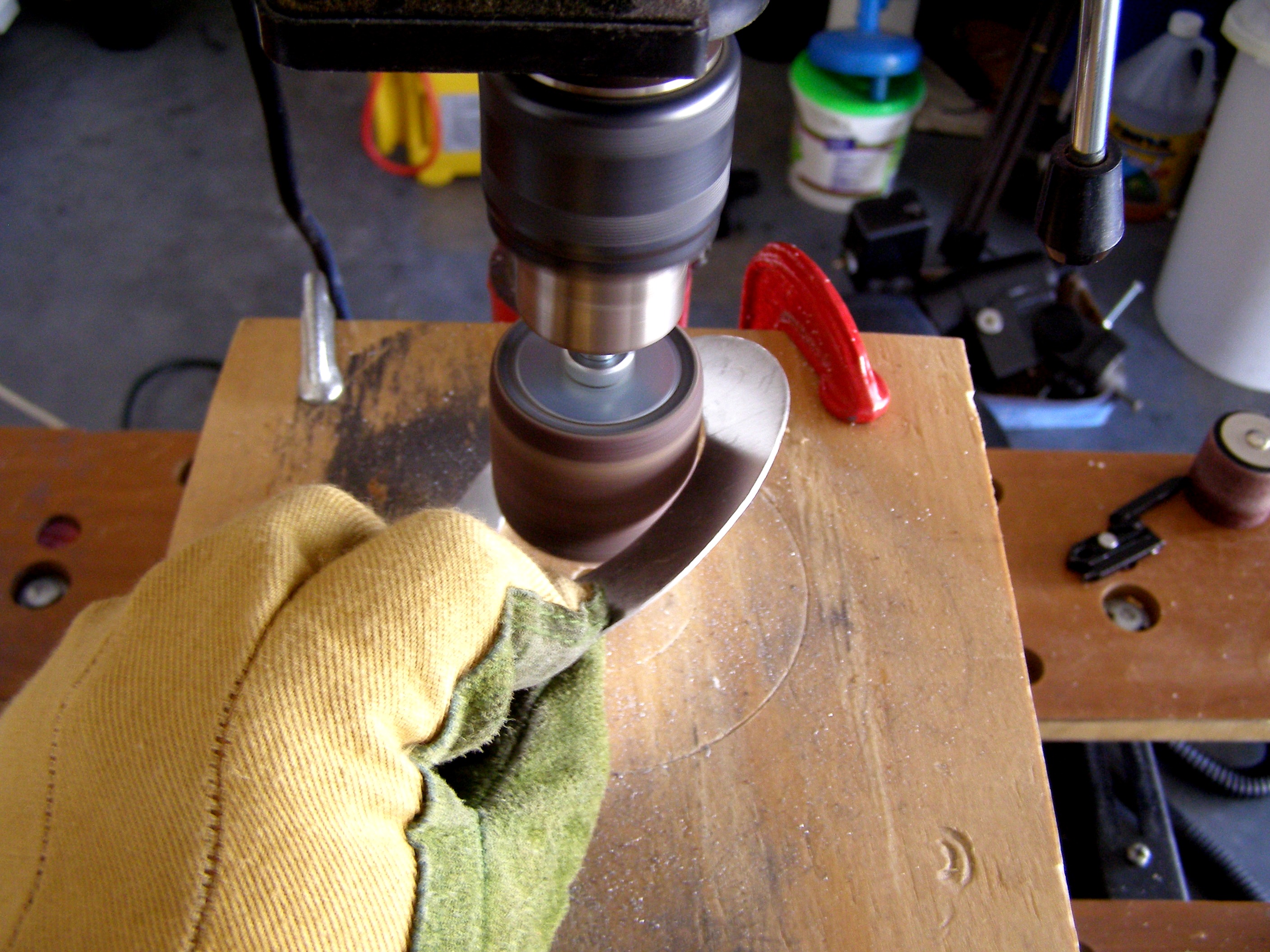
also cut out using a hole saw on my drill press. Each baffle had a
different size opening. Next, the aperture opening had their edges
milled to form knife-edges in each baffle. This was done by slowly rotating and grinding
and sharpening the edges of the openings on an angle using a sanding drum attached
to my drill press, as seen above. The beveled side of the baffles
faces the focuser. This crude but effective process worked great!
Nothing like a little inventive ingenuity to get the jobs done.
The way knife-edge
baffles work, is that when light enters the telescope at acute
angles, the baffles deflects it and prevents the stray light from
reaching the eyepiece, thereby aiding in better contrast. The
knife-edge for each baffle does its job because a sharp edge has no
exposed surface for light to bounce off perpendicularly to be seen
at the eyepiece, which renders what we mentioned earlier, better
contrast. |
|